Solo show, Sihl Delta, Zurich, CH, 2024

Spieglein 1, 300 x 450 x 450 cm, installation, wood structure, velvet curtains, lacquer on collected lights and furniture wrapped into scrap canvas and textile, lacquer on collected objects and plaster moulders, collected blue glass, coloured bulbs, recorded text, original soundtrack, organic perfume, 2024
“The mirror does not flatter, it faithfully shows whatever looks into it,
namely the face we never show to the world because we cover it with the persona, the mask of the actor.
But the mirror lies behind the mask and shows the true face.”
– Carl Jung, Archetype and the Collective Unconscious (1935)
“Mirror, mirror on the wall, who is the fairest of them all?” Around us, a myriad of billboards and promotional videos bombard us with well-being punchlines, the latest trends and must-have items to buy at any cost. This consumerist frenzy is unsettling, if not anxiety-inducing. Let’s put on our beauty masks, hoping they will disguise our inner conflicts.
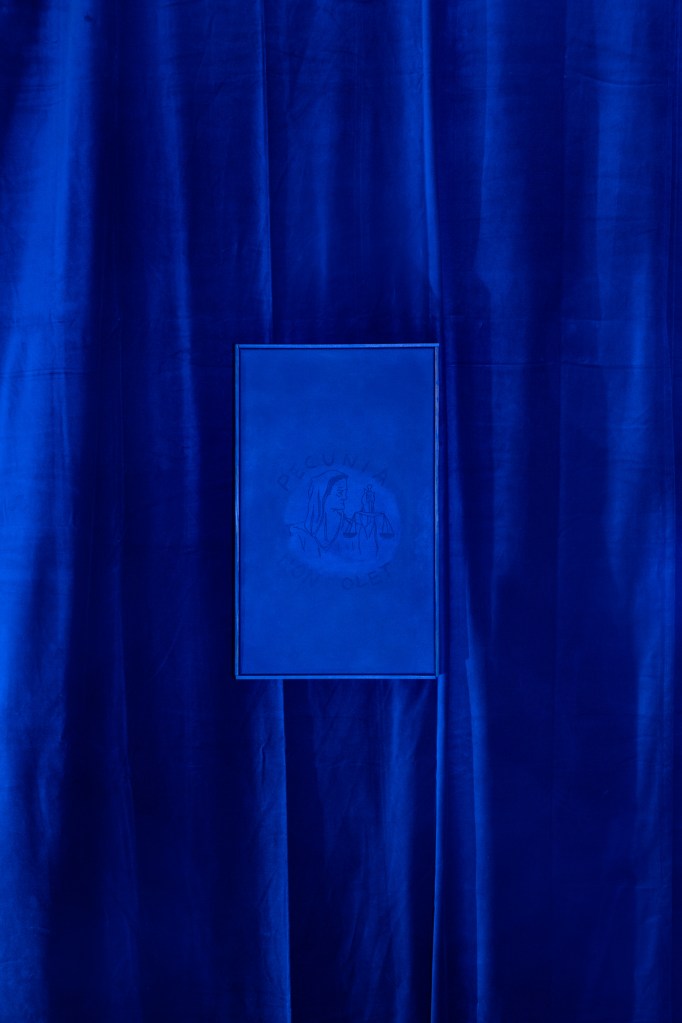
The Court Jester 18 (Pecunia Non Olet), 50.5 x 30.5 x 2.5 cm, oil, pencil, marker, Indian ink on canvas, walnut stain on wooden frame, 2024
Geneva-based artist Sylvain Gelewski spent four months at Sihl Delta, an artist residency space in the heart of Sihlcity, Zurich’s vast shopping mall. Inspired by this consumption epicentre, he creates a double-installation with multiple interpretations, perhaps as a strategy of withdrawal or escape from an overly oppressive reality. The two exhibition rooms, juxtaposed and contrasting, embody Zurich’s heraldic colours: white and blue. For the artist, this is a given condition which reflects the hosting city. An earlier version of this body of work was presented in Sandviken in Sweden in 2023, where the installation Tempus Fugit was displayed in yellow (gold) and blue. Often bridging resonance and dissonance in his work, Sylvain Gelewski evokes the similarities between Sweden and Switzerland; two pseudo-neutral countries vaunted for their image of good students, places of compromise and cleanliness, yet concealing a far more complex reality. Let’s put our exemplary masks back on.
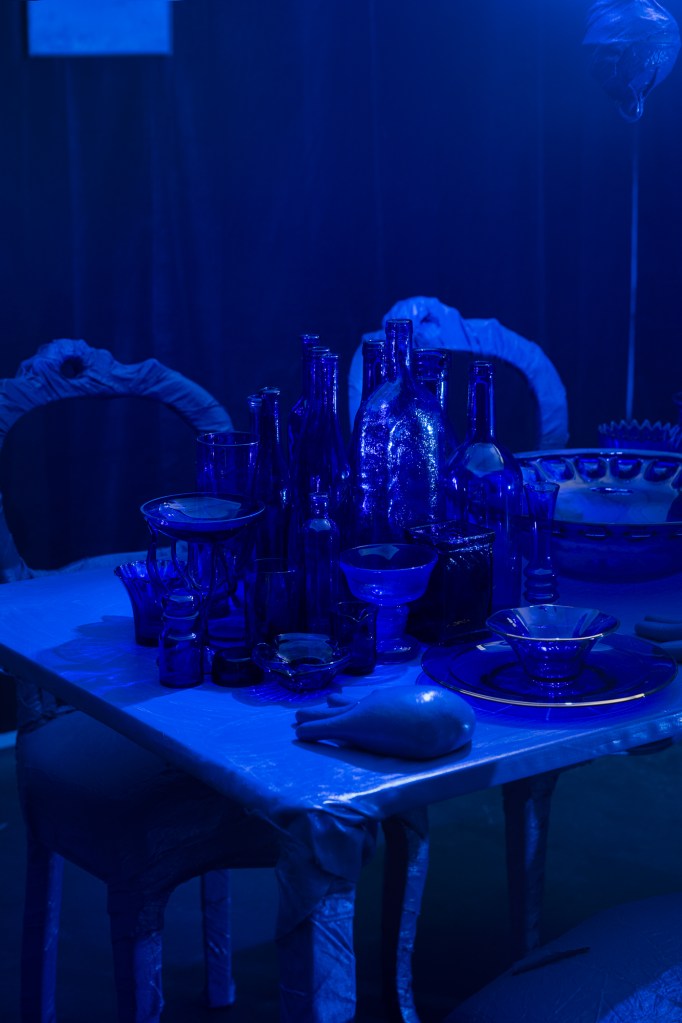


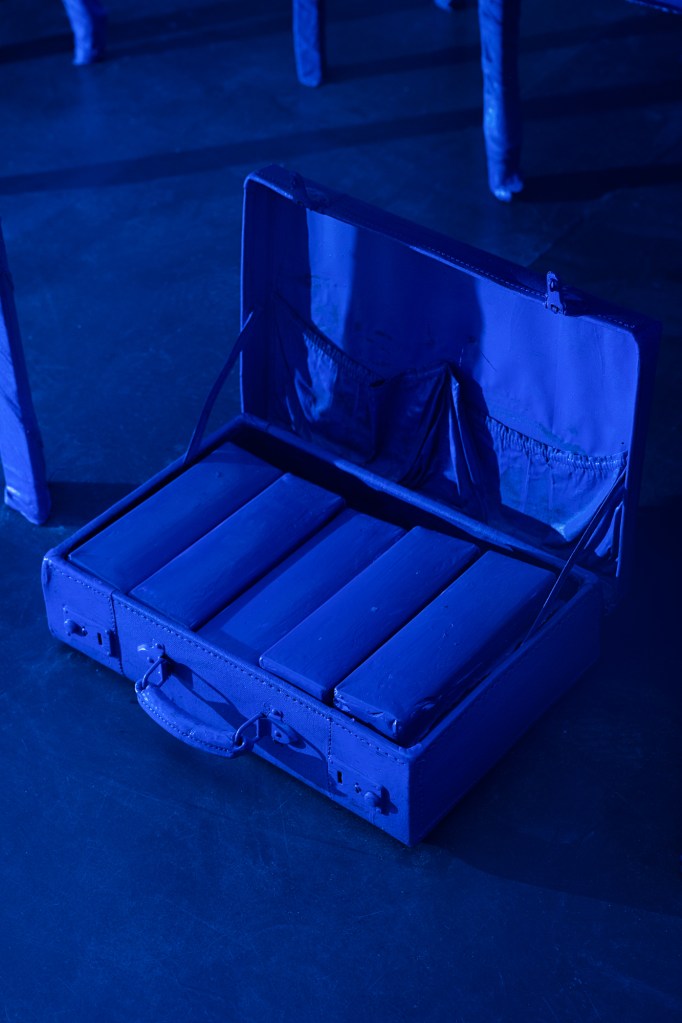

Spieglein, Spieglein, exhibitions views
Immersed in a baroque-contemporary setting with scent and sound, Spieglein, Spieglein brings us face to face with a profound interiority. As words resonate through space, visitors find themselves propelled into the artist’s psyche, his inner voices speaking at different levels of consciousness, between childhood memories, fears and existential reflections. The two rooms depict distinct states of mind: on one side, the self’s relationship to ambition, social behaviours and superficiality. On the other, a more isolated and introspective voice manifests.
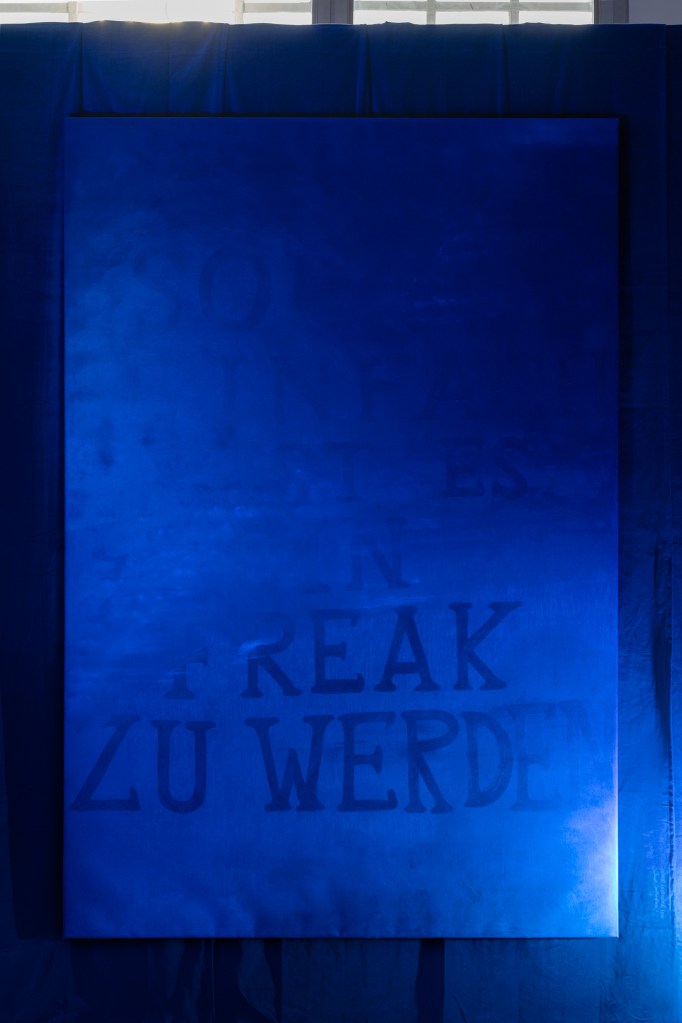
Spieglein 1 (So einfach ist es ein Freak zu werden), 240 x 160 cm, oil on linen, 2024
Like a living sculpture, a performer in a white and blue dress, wearing a double mask, traverses the spaces and wanders gently like an apparition. The “persona” – a term deriving from ancient theatre that describes the mask worn by actors on stage – becomes the project of a fictitious identity, a social facade worn in public. In Carl Jung’s psychiatrist model of the psyche, the persona lies between the ego and society. By invoking different sources from Venetian masks to Stanley Kubrick’s Eyes Wide Shut, Sylvain Gelewski addresses the ambiguity of identity, what is visible, revealed, or hidden.
All around, objects wrapped in scraps of canvas recall a “benestante” milieu, where social conventions proliferate. These objects, dehierarchised by their chromatic uniformity, seem to transcend their primary function in favour of an enigmatic staging. Gleaned by Sylvain Gelewski in the streets or collected through a non-commercial Telegram group, these objects take on an obsessive character, revealing an emotional ambivalence but also a recuperating practice intimately linked to the artist’s precarious situation.
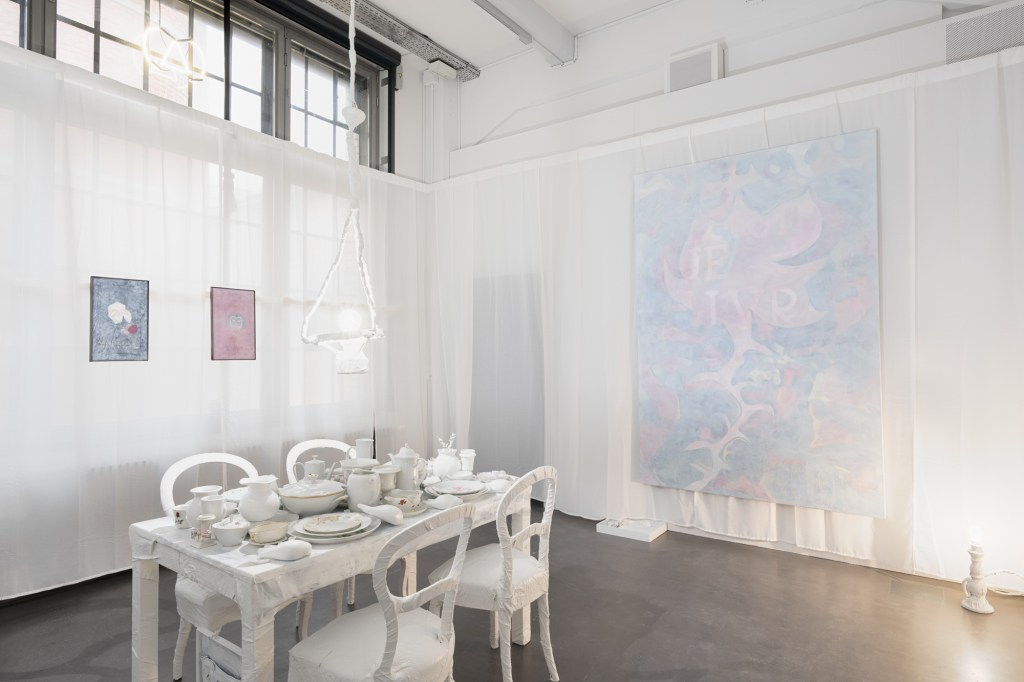
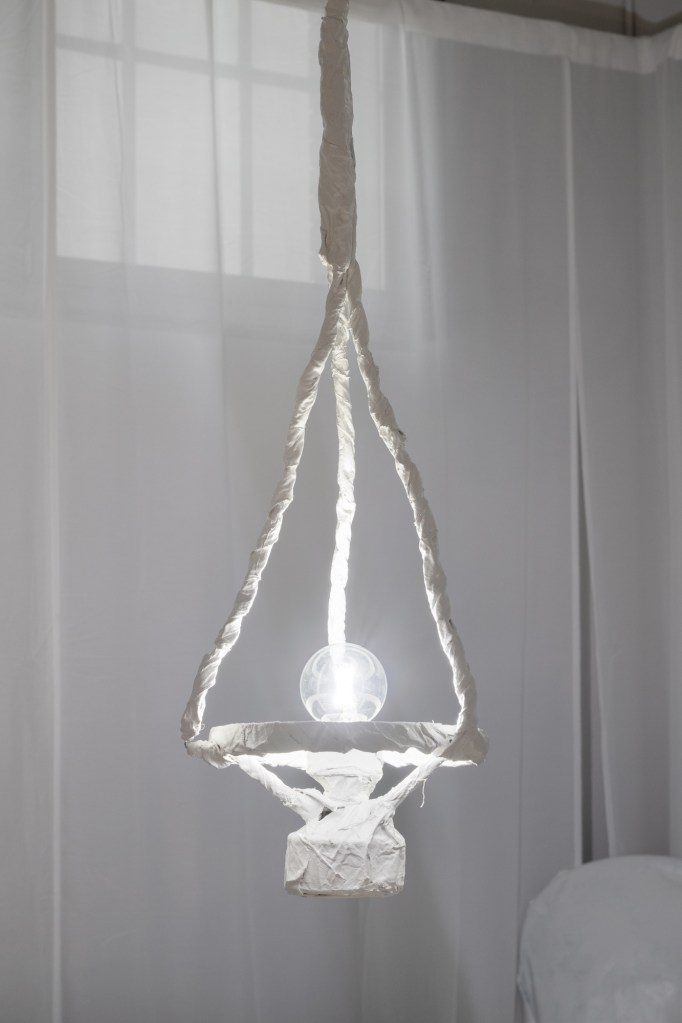
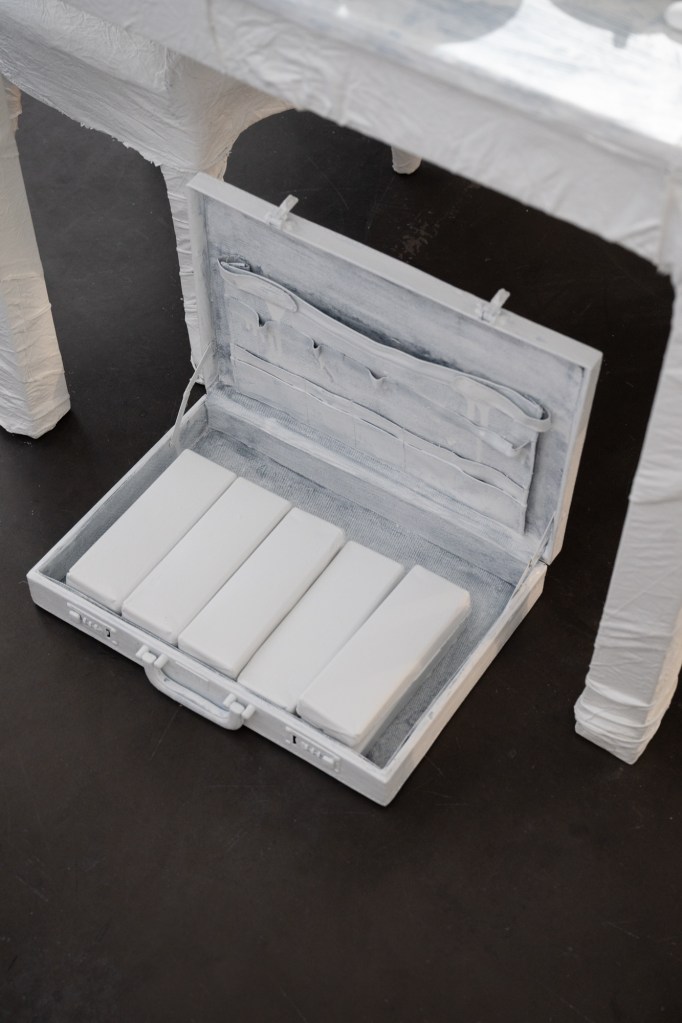

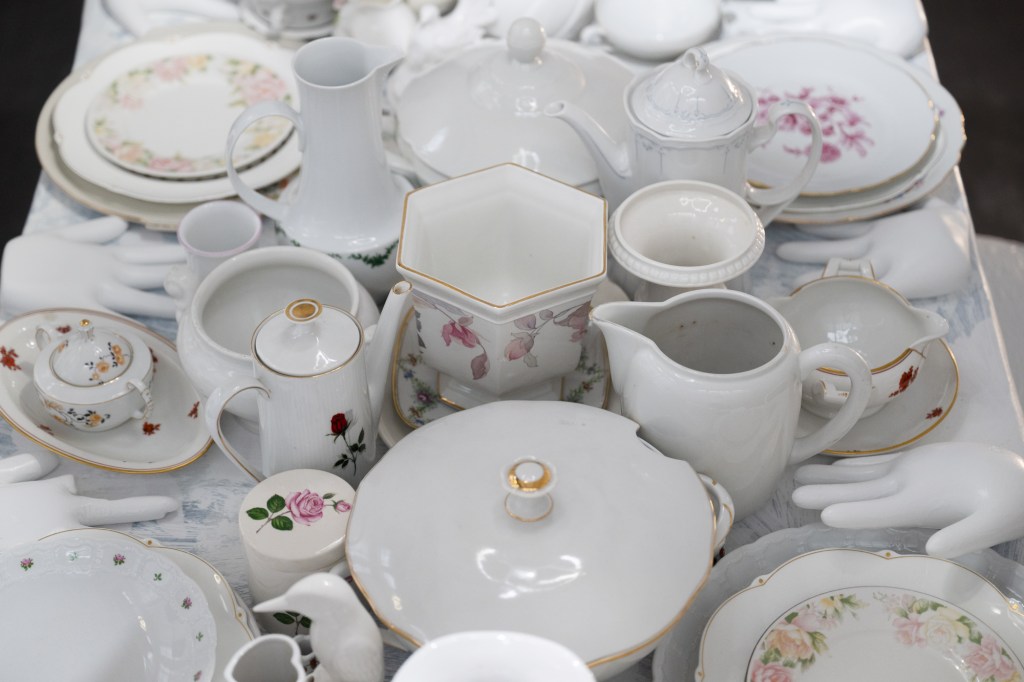
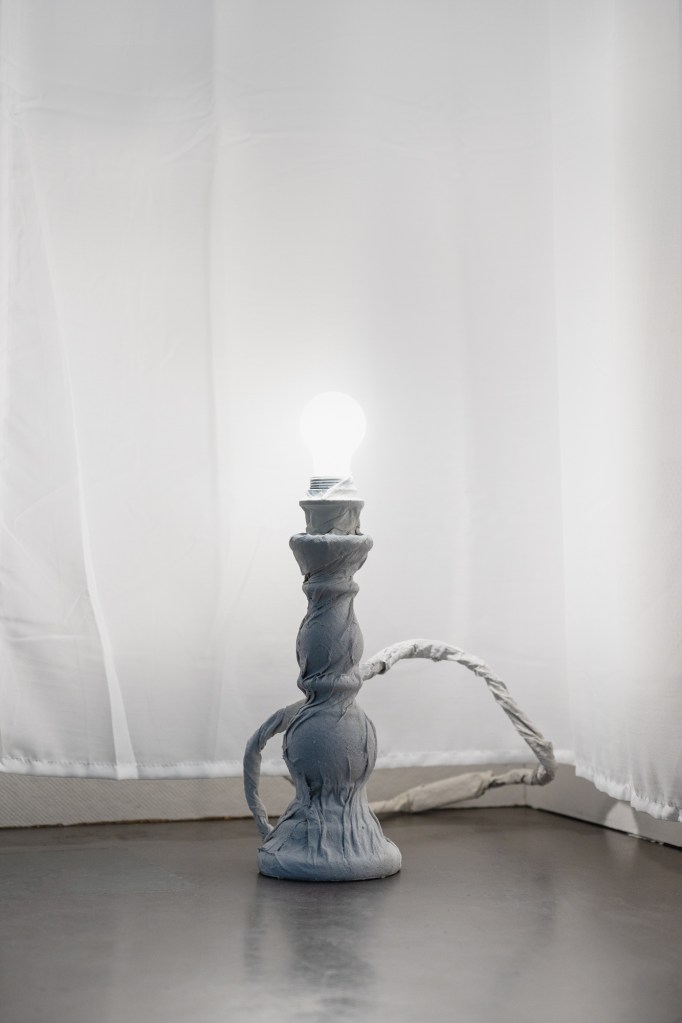

Spieglein, Spieglein, exhibitions views
At the centre of the two rooms is a table, a symbol of norms of good conduct which marks the onset of the social game. In a famous scene from Luis Buñuel’s film The Ghost of Liberty (1974), the surrealist director overturns bourgeois conventions by undressing his guests and having them sit around a table on toilets instead of chairs. Comedy, with its exaggeration and referential tactics, offers a means of distancing, even extracting from reality. In particular, humour as a critical tool can be used to highlight social dysfunctions. Especially cherished in Commedia dell’arte, this genre transforms situations into ridicule, just as it caricatures its characters in extreme archetypes, underlining their often mediocre position on the social ladder.

(l. to r.) The Court Jester 17 (Sky is the Limit), 50.5 x 30.5 x 2.5 cm, oil, pencil, Indian ink on canvas, walnut stain on wooden frame, 2024; The Court Jester 15 (Vigilance Constante), 50.5 x 30.5 x 2.5 cm, oil, pencil, watercolour, Indian ink on canvas, walnut stain on wooden frame, 2024
Within this comedic tradition, the jester, or king’s fool, finds its incarnation. The small paintings on the wall from Sylvain Gelewski’s series The Court Jester portray various jesters or jokers. Known in the Middle Ages for amusing the noble courts, this marginal figure was uniquely permitted to mock the sovereign. They performed at great banquets, where opulence and extravagance reigned. Queer, marginal, grotesque, neurodivergent (or rather “neuro-diverse” as Sylvain suggests) but essential to social amusement, the fool cynically becomes the antagonistic mirror of a society, revealing its symptomatic use and rejection.

The Court Jester 21 (NORMAL), 50.5 x 30.5 x 2.5 cm, oil, pencil, marker, Indian ink on canvas, walnut stain on wooden frame, 2024
For Sylvain Gelewski, the contemporary jester is today’s artist: an emblem of dissidence and marginalisation. And yet, despite a profound desire to break away from conventions, artists find themselves instrumentalised by the same system that sustains them. In the entertainment industry, artists become their product but also their prophecy.
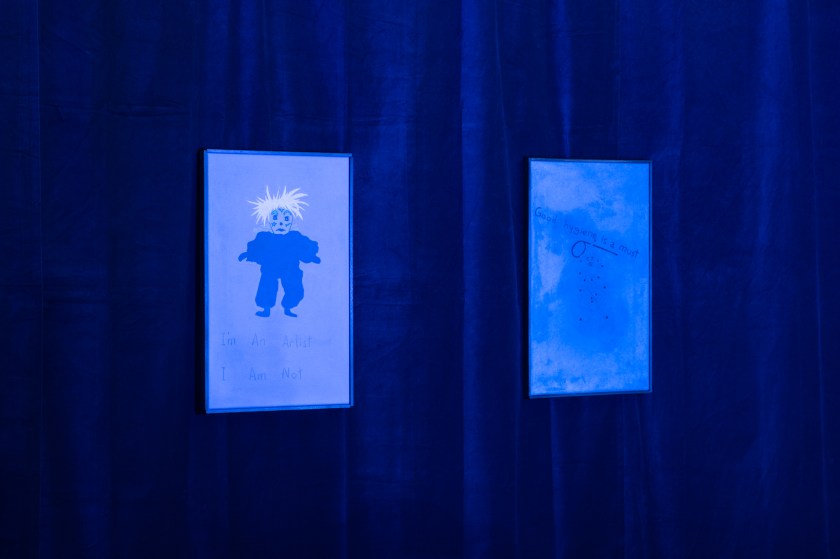
(l. to r.) The Court Jester 22 (I’m An Artist, I Am Not), 50.5 x 30.5 x 2.5 cm, oil, acrylic, pencil, marker, Indian ink on canvas, walnut stain on wooden frame, 2024; The Court Jester 16 (Good hygiene is a must), 50.5 x 30.5 x 2.5 cm, oil, pencil, marker, Indian ink on canvas, walnut stain on wooden frame, 2024
In an age of fast-paced consumption, technology and quest for self, isn’t it time to extract oneself and value the benefits of solitude? Between conforming and subverting, Spieglein, Spieglein confronts us with ambiguities and questions encapsulating the perpetual, interdependent and complex duality: “I’m an artist, I am not”.

Spieglein 2, 300 x 500 x 500 cm, installation, wood structure, cotton curtains, lacquer on collected lights and furniture wrapped into scrap canvas and textile, lacquer on collected objects and plaster moulders, collected white porcelain, coloured bulbs, recorded text, original soundtrack, organic perfume, 2024
After all this, mirror, mirror, do you still dare to judge?
Camille Regli


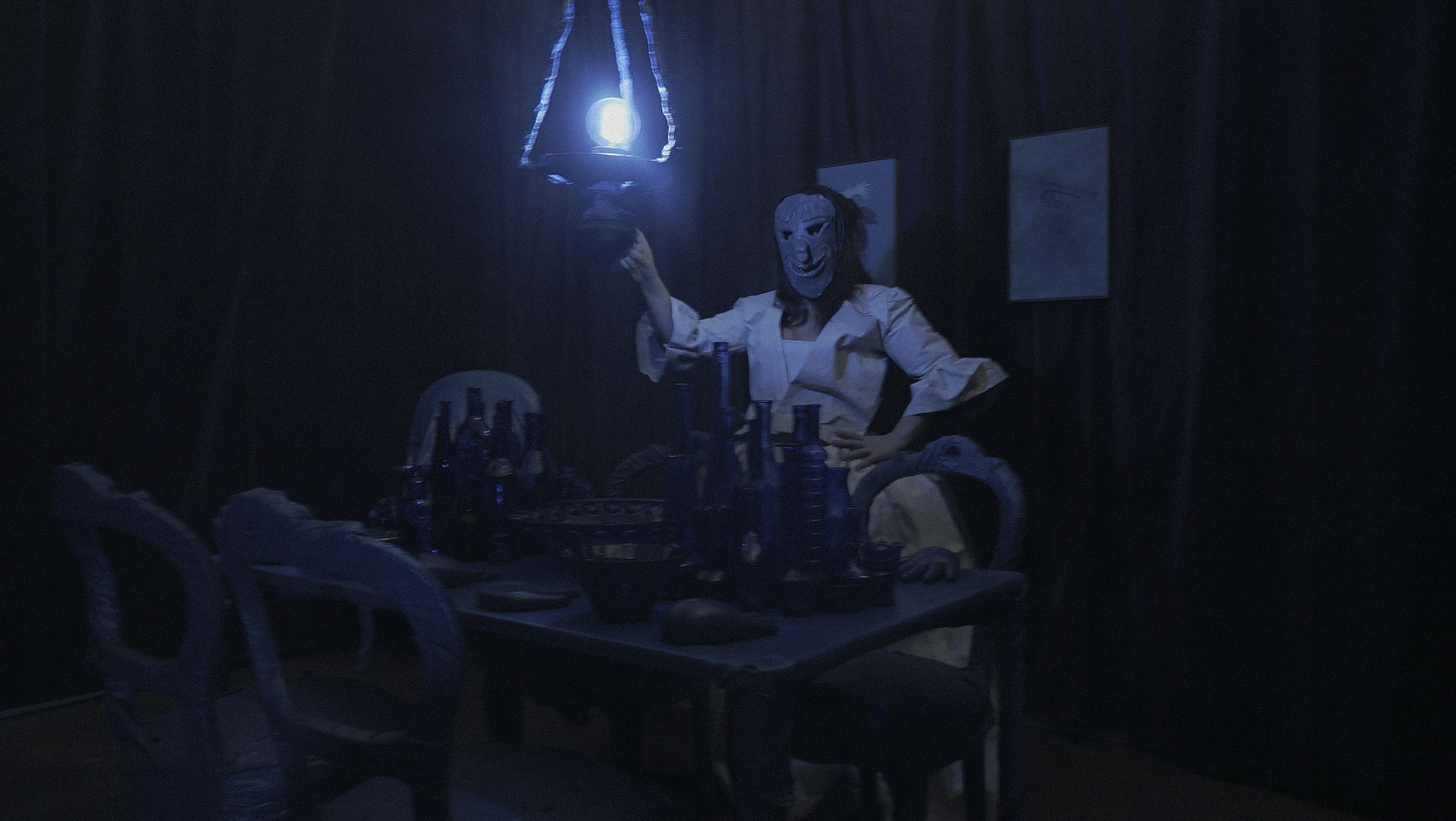


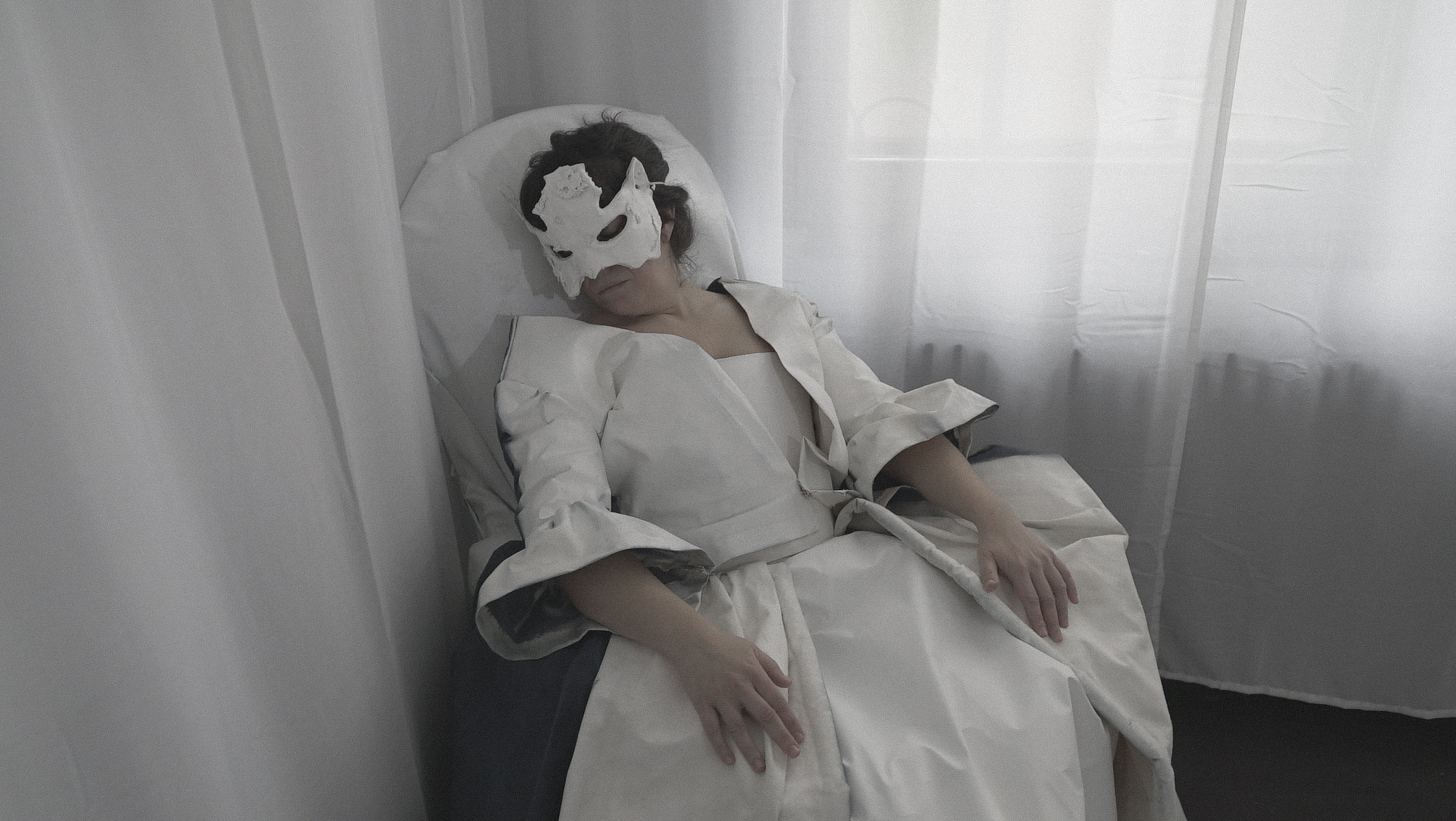


Spieglein, Spieglein, performance views
Curatorial support: Camille Regli
Performer: María Sabato
Dramaturgy: Anissa Nussbaumer
Soundtrack, reading: Henry Sims
Costume, masks: Ernestyna Orlowska
Poster graphic design: Elea Rochat
Exhibition photos: Sebastian Stadler
Video: Massimiliano Rossetto
Performance photos: Oleksandra Tsapko
Graphic design: Martina Perrin
Special thanks to: Marc Eicher, Nicola Genovese, Nils Amadeus Lange, Patrick Cipriani, Sarah Wiesendanger.
Generously supported by Fonds Cantonal d’Art Contemporain Genève, Temperatio-Stiftung, République et canton de Genève, Oertli Stiftung.
 SYLVAIN GELEWSKI